Research Projects

Interreg Alcove

Interreg Alcove

INTERREG France – Wallonia – Flanders – ALCOVE: Redefining Lung Cancer Screening Through Breath Analysis

The INTERREG ALCOVE project, coordinated by Lille University Hospital (CHU de Lille), aims to improve lung cancer screening in the cross-border area of France – Wallonia – Flanders, through a coordinated, multidisciplinary and innovative approach.

Project Objectives

The long-term goal of the ALCOVE project is to offer a new, non-invasive and fast tool to redefine the lung cancer screening pathway by:

  • Testing the use of an electronic nose by healthcare professionals as a new tool for medical dialogue
  • Evaluating the electronic nose’s ability to detect the potential risk of lung cancer
  • Facilitating communication between at-risk populations and the healthcare system
  • Involving patients, healthcare professionals and institutions in a co-construction process

The ambition is to enable earlier diagnosis, better patient care, and optimized use of available resources.

Why is ALCOVE essential?

A major public health issue
Lung cancer is one of the deadliest cancers in Europe. Diagnosis often comes too late, significantly lowering 5-year survival rates. ALCOVE promotes early detection through targeted screening of at-risk individuals.

A concrete impact on the territory
ALCOVE addresses three key challenges for the future of screening:

  • Tackling low participation rates in screening programs
  • Testing a miniaturized electronic nose in real hospital settings
  • Proposing a reproducible and transferable model beyond the cross-border region

A coordinated cross-border approach
The project brings together hospitals, research centers, universities, and involves patient associations and institutions from France, Wallonia, and Flanders. It is structured into six work packages addressing technological, clinical, and organizational aspects.

What ALCOVE will deliver:

1. A simple, clinically validated screening tool for primary care professionals

2. Shared data and indicators to guide public health policies for organized lung cancer screening

3. A transferable screening model for use in other regions

4. Stronger engagement from professionals, institutions, and patients

Project Start: October 1, 2024
Duration: 4 years
Budget: €6.6 million co-funded by the ERDF and the Walloon Region

Coordinator:

CHU Lille (France)

Partners:

Stay updated on the project:
> On LinkedIn < ALCOVE - Redéfinir le dépistage du cancer du poumon I De screening op longkanker herdefiniëren
> On the project website < alcove.crosss3.eu
> Subscribe to the newsletter <

This project is funded by the Interreg France – Wallonia – Flanders programme: https://www.interreg-fwvl.eu/fr

SMOOTH : Stable Metal-free Organic transistOrs Thanks to Homojunction

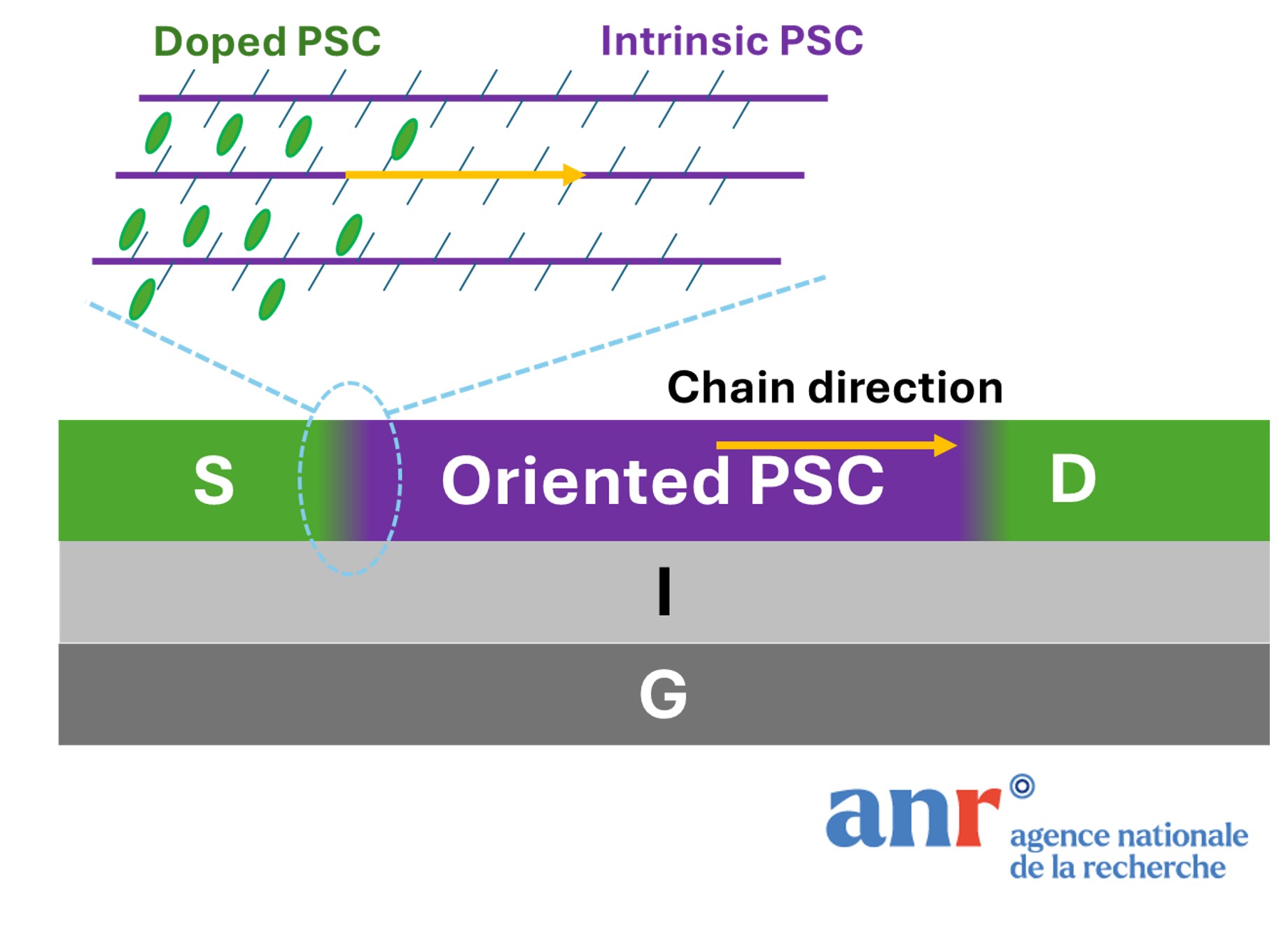
The SMOOTH project targets challenges in organic thin-film transistors (OTFTs) for efficient, sustainable, and cost-effective electronics. Current reliance on inorganic components, especially metals, raises concerns about resource scarcity and environmental impact. Additionally, the metal/organic semiconductor interface limits OTFT operation. SMOOTH proposes an innovative "all-organic" design, replacing metal/polymer heterojunctions with homojunctions. It focuses on metal-free printed devices, using oriented polymer semiconductor (PSC) channels and doped PSC areas for source and drain electrodes.

The consortium comprises experts in polymer s processing, macromolecular engineering, OTFT fabrication, and near-field techniques. SMOOTH aims to demonstrate that the homojunction can be used to realize very efficient S&D electrodes for OTFTs, metal-free OTFT capable of 10,000 ON/OFF cycles in ambient conditions, with reduced contact resistance and enhanced stability of doped PSCs under electrical bias. The proposed methodology includes aligning doped PSCs via high-temperature rubbing and fabricating conducting electrodes through ink-jet printing and/or vapor phase doping.

SMOOTH's success is anticipated to significantly contribute to a sustainable technological future, expanding the market for various applications targeted by organic electronics. Aligned with the call's strategic goals, it advances knowledge on polymer-based materials for specific applications, involving a multidisciplinary team of chemists, physical-chemists, and physicists.

Led by Olivier SIMONETTI (University of Reims, L2n), partners: Nicolas LECLERC (ICPEES, STELORG), Martin BRINKMANN (ICS, STELORG) and Maxime HARNOIS (University of Rennes, IETR).

Smooth

GRIOT : GReen Insulator for sustainable Organic elecTronics

The EXEBIO project GRIOT focuses on developing sustainable electronics within the realm of organic electronics, leveraging the use of organic materials like carbon-based polymers in electronic components. Organic electronics offer advantages such as flexibility, lightweight nature, cost-effectiveness, and energy efficiency compared to traditional inorganic electronics. Specifically, the project targets organic transistors (OTFTs), which hold promise for various applications due to their adaptability and low-cost fabrication. OTFTs find use in flexible displays, RFID tags, sensors, and IoT devices.

This initiative emphasizes the development of organic transistors using eco-friendly materials, aiming for sustainability by utilizing biosourced based components. The project's ultimate goal is to ensure sustainability in OTFTs by employing green materials and fabricating processes to minimize the carbon footprint.

The project initially centers on developing a technology for the transistor's insulator. This strategy capitalizes on the expertise of two specialized teams: the organic electronics group of L2n – URCA and the biomolecules and biomaterials group of FARE – INRAE – URCA. The heart of the project is to implement the biosourced material in an OTFT as an insulator.

Led by Olivier SIMONETTI (University of Reims, L2n), partner: Véronique AGUIE-BEGHIN (INRAE, UMR FARE)

Griot